
REVIEW · GOBI DESERT EXPEDITIONS
14 days Combination of Gobi and Central Mongolia
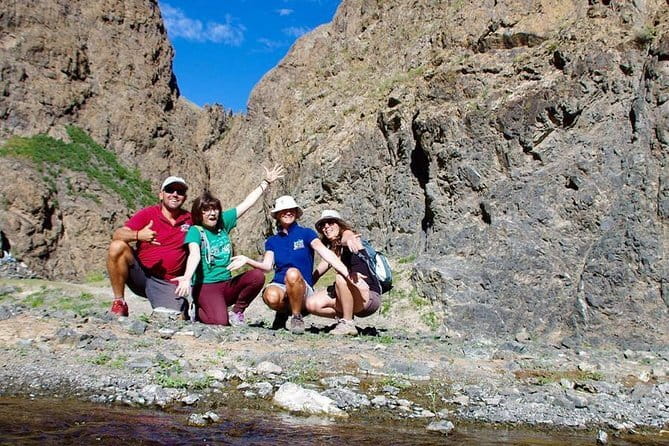
One foot in the desert, the other on steppe trails. This 14-day route strings together Mongolia’s biggest nature hits and a few serious culture stops, from Khongoryn Els dunes to Erdene Zuu in Kharkhorum.
What I like most is the balance: you get proper time outdoors, with camel trekking and hikes, not just fast photo stops. I also like the small-group feel, up to 12 travelers, plus the practical camping kit so you are not stuck figuring it out on the fly. The main thing to consider is that this is a weather-dependent trip, and Mongolia in shoulder seasons can feel colder at night than people expect.
In This Review
- Key highlights worth your attention
- A two-region route that makes distances feel manageable
- Price and value: what $2,025 covers, and what to budget
- Your base setup: camping gear included, small group size, real night sounds
- Entering the Gobi: White Stupa, Three Beauty Mountains, and Baga Gazariin Chuluu
- Khongoryn Els: dunes you ride, not just photograph
- Bayanzag Flaming Cliffs and the Roy Chapman Andrews dinosaur-egg story
- Ongi Monastery to Orkhon Valley: culture on top of big nature
- Tsenkher hot spring: a mineral bath with real specifics
- Khorgo Terkhiin Tsagaan Nuur: volcanic craters and the Great White Lake
- Kharakhorum and Erdene Zuu, then Khustai National Park’s Takhi
- Packing and comfort: what will make your days easier
- Who this tour is for, and who should think twice
- Should you book this Gobi and Central Mongolia combination?
- FAQ
- How much does the tour cost?
- How long is the experience?
- What’s included in the tour package?
- Is travel insurance included?
- What fitness level do I need?
- How many people are in the group?
- What happens if poor weather cancels the trip?
Key highlights worth your attention
- Camel trekking time built in, so you actually experience the sand rather than just drive past it
- Dinosaur-egg history at Bayanzag, tied to the Roy Chapman Andrews discovery story
- Hot springs at Tsenkher, with specific details on temperature and mineral content
- Orkhon Valley slow day, with time to hike and try local activities instead of constant transfers
- Erdene Zuu and Kharakhorum, grounding the nature days in Mongol Empire-era sites
- Khustai National Park’s Takhi reintroduction, one of the most meaningful wildlife angles in the country
A two-region route that makes distances feel manageable
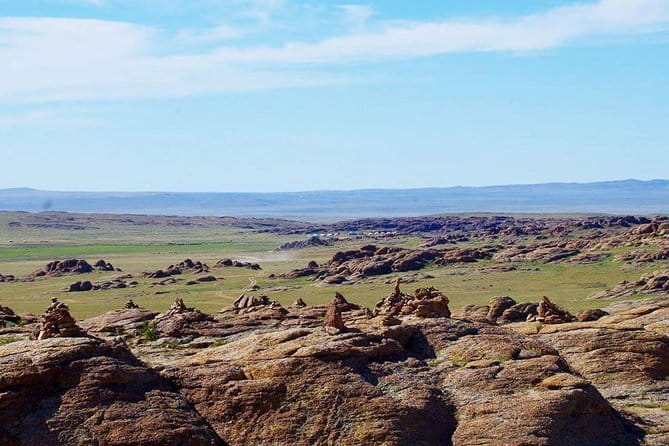
This tour is built as a combination of Great Gobi scenery and Central Mongolia classics, which is exactly what you want if you have only two weeks. You start in the Gobi with big, dramatic geology, then you shift to river valleys, hot springs, volcanic-lake hiking, and historic Mongol sites.
The trick here is pacing. You are not doing one giant all-day drive every single day. Several stops are half-day style explorations or activity days with no driving, which is key in a country where road time can stack up fast.
Longer hauls south into the Gobi proper
- Ulaanbaatar: Semi-Gobi Desert Day Trip & Camel Ride★ 4.0 · 92 reviews
- Best 6-Day Gobi Tour Discover Mongolia★ 4.9 · 13 reviews
- Travel to Gobi by train Visit World energy Center★ 4.9 · 12 reviews
- 8 Days Tour: Gobi Desert And Kharkhorin★ 5.0 · 10 reviews
- 1 Day Semi-Gobi Tour with Lunch And Enjoying Camel or Horseback★ 5.0 · 9 reviews
Price and value: what $2,025 covers, and what to budget
At $2,025 per person for a 14-day trip, the value comes from the included essentials and the fact you are covering a lot of ground. The package includes camping comfort gear: sleeping bag, tent, and mattress, plus meals and entrance fees and taxes.
You also get lunch and breakfast most days (13 of each listed), and dinner for 12 days. That imbalance is normal for multi-day travel where some days start late or end with transfers, but it’s still something to notice: plan for the one or two times you might not have dinner included, depending on how the day lands for your group.
What you should still budget for:
- Travel insurance (not included)
- Personal snacks and drinks
- Souvenirs or stops that are optional, like the cashmere shop mentioned as a possible route stop into Ulaanbaatar
One more practical point: this is listed as booked about 51 days in advance on average. If your dates are flexible, you might wait, but if you want a specific time of year, booking sooner usually helps.
Your base setup: camping gear included, small group size, real night sounds
The experience style matters almost as much as the sights. Since the tour includes a tent, sleeping bag, and mattress, you are set up for the outdoor sleeping reality without having to rent gear in town or guess what quality you will get.
The group cap of 12 travelers changes the feel of the trip. Smaller groups move with less chaos, and it tends to mean more time to talk with local guides and drivers during breaks. That also helps on the more delicate parts of the route, like dune days and early-morning starts.
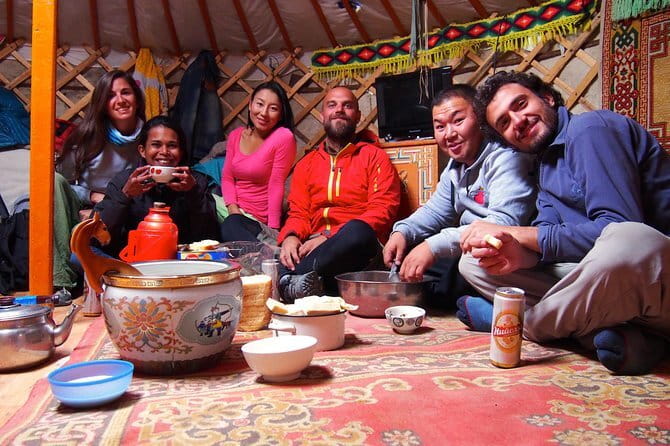
And yes, the nights can be part of the show. In the desert and open steppe, animal life gets close. One of the most-loved moments with this style of camping is waking up to the sight and sound of herders’ animals nearby, sometimes even with foxes sniffing around tents. It is not guaranteed, but it is the kind of thing that happens when you camp in the working countryside instead of behind a fence.
Entering the Gobi: White Stupa, Three Beauty Mountains, and Baga Gazariin Chuluu
Your first days lean into classic Gobi geology and viewpoint energy.
Baga Gazariin Chuluu is a granite stone-mountain set out in open plain. The description includes a standout scale: a high formation about 15 km long and 10 km wide, elevated around 1,768 meters. For your first morning, that means you get big open air right away, and you can usually feel how remote the region is once you drive out from settled areas.
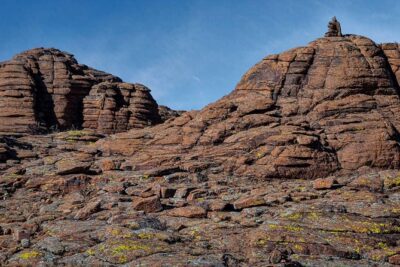
Next comes Tsagaan Suvarga, also known as the White Stupa. This is an eroded cliff shaped by natural forces, and the name reflects how locals view its form. Stops like this are great because they teach your eyes what to look for: wind-cut textures, layered rock, and the way sunlight makes pale cliffs look almost sculpted.
Then you head toward Gobi Gurvansaikhan National Park, spending time in the area around the Three Beauty Mountains. You pass Dalanzadgad, the provincial center. That short “real town moment” matters, because it breaks up the sense that you are always in the wilderness. You get a clearer feel for what supplies and everyday life look like in the region.
What to consider in the Gobi:
- Visibility changes everything. When skies are clear, you get huge panoramic moments. When weather rolls in, some viewpoints turn into a gray blur.
- Bring layers. Even when daytime feels warm, mornings and evenings can get cold fast.
Khongoryn Els: dunes you ride, not just photograph
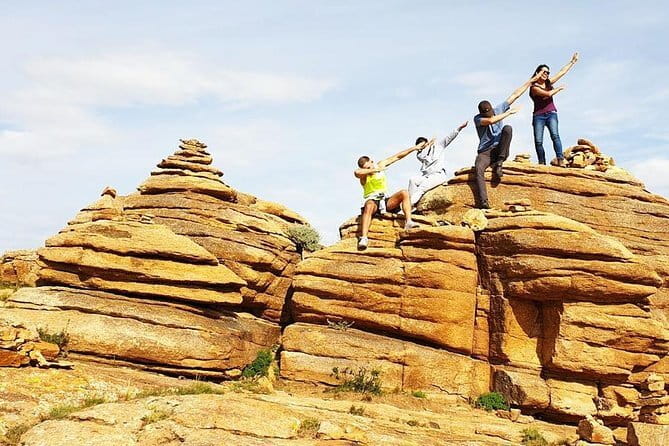
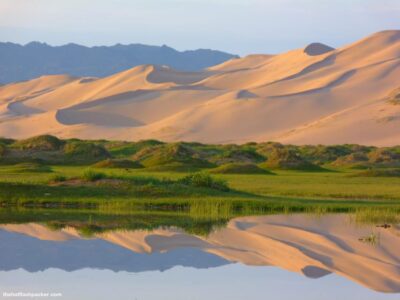
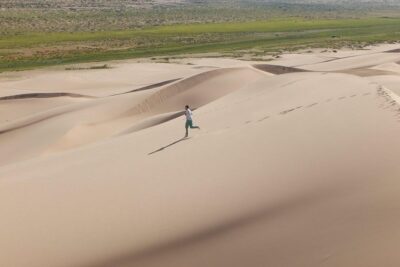
The star Gobi destination in this program is Khongoryn Els, the vast shifting dune field described as about 180 km long, up to 400 m tall, and roughly 20 km wide. You should treat a dune day as both scenery and movement practice. The wind does not care about your itinerary.
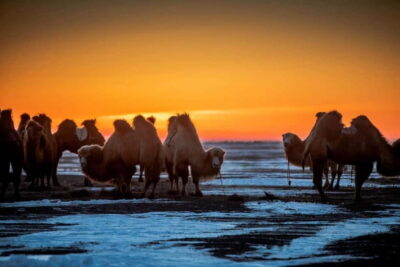
You get two dune-related days. One day includes drive time and dune viewing in the morning, then you return for a camel day. The camel portion is where this tour earns its keep: you ride out across sand on a schedule that allows for an active experience, with a ride time listed as roughly 2 to 5 hours. If you like a longer camel ride, you may have the chance to cross the dunes on a two-humped camel. That detail is worth paying attention to because it changes how you feel on the ride.
If you want one practical tip: you will be happier if you treat the camel ride like a slow hike. Sit steady, keep your eyes forward, and accept that sand will be sand. It is rarely painful, but it is never smooth like a road.
Also, if your camera matters, dunes are the place where light changes fast. Early hours give texture; later light can blow out pale sand colors unless you adjust settings.
Other loops through central Mongolia with nights on the grass
Bayanzag Flaming Cliffs and the Roy Chapman Andrews dinosaur-egg story
After you settle your eyes on dunes, the program pivots to a place famous for a very different kind of wonder: Bayan Zag, more widely known as the Flaming Cliffs. The area is tied to the formation of the landscape over 60 to 70 million years, and the tour focuses on the discovery story that made it globally famous.
The highlight here is the connection to Roy Chapman Andrews, the legendary explorer associated with the first nest of dinosaur eggs discovered in the area. That is a great example of why this tour is more than a nature circuit. You are not just looking at rocks, you are learning what the rocks helped scientists find.
What I like about this kind of stop:
- It gives you an anchor point for understanding the region beyond “big scenery.”
- You get a narrative thread that makes the day feel purposeful, not random.
One consideration: dinosaur site stops can feel different depending on how much signage and interpretation you get in your moment. If that part matters to you, ask your guide how much time you will spend on explanation versus photos.
Ongi Monastery to Orkhon Valley: culture on top of big nature
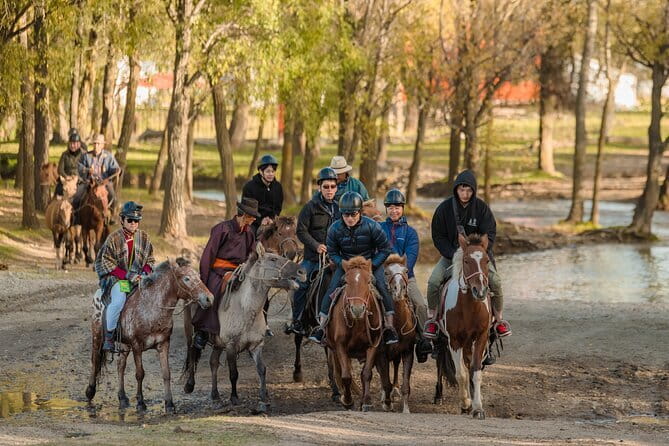
Once the Gobi days are done, you shift into Central Mongolia’s historical landscape and river valley atmosphere. Two major stops define this section: Ongi Monastery and the Orkhon Valley area around Orkhon Waterfall.
Ongi Monastery, also called Ongi Khiid, is a former monastic center founded in 1660. The program frames it as one of the largest monasteries in Mongolia, with two temple complexes on the north and south of the Ongi Gol river. Even if you do not read much about Mongol monastic life, the site works because ruins still communicate scale. You can usually feel the size through the arrangement and the ground plan.
Then you move to the Orkhon Valley, including Orkhon Waterfall and a day tied to the longest river named Orkhon in Mongolian context. The description notes the waterfall’s formation as tied to volcanic activity. This is one of those moments where geology shows up again, but in a way you can hear, not just see.
You also get a no-driving day in Orkhon Valley. That’s a rare gift in a route like this because it means you are not rushing to the next transfer. The program lists chances to ride a horse, fish, and hike. The details of which activities are offered can vary with conditions and group comfort, but the structure is clear: you get time to experience nomadic-style daily rhythms in a calmer way than a packed schedule would allow.
Tsenkher hot spring: a mineral bath with real specifics
Hot springs are one of those Mongolian travel rewards that feel simple, but they matter. Tsenkher Hot Spring is described as one of Mongolia’s biggest hot springs, with a temperature around 86 degrees and a flow rate and mineral profile that includes high alkalinity and relatively high fluoride.
That level of detail helps you make sense of what to expect. A hot spring like this is not just a quick soak. It is a chance to reset after desert days, and it gives you a break from hiking and riding without losing the “outdoor” feel.
Practical mindset: treat hot springs like a comfort day, but do not expect spa-style luxury. You are in the Mongolian countryside, where “good enough” and “local custom” often define the experience.
Khorgo Terkhiin Tsagaan Nuur: volcanic craters and the Great White Lake
The program uses a mix of drive and hike to reach Khorgo Terkhiin Tsagaan Nuur National Park, with time around volcanic scenery. On the way, you pass Chuluut gorge, described with extinct volcanic craters, pine-clad lava fields, and occasional herds of grazing yaks.
The “Great White Lake” is specifically referenced as an English name for the area’s lake, and the history includes the note that the extinct volcano erupted about 8,000 years ago. For many travelers, this is where Mongolia feels less like desert and more like a place with deep time under your feet.
Your second day here includes hiking to Khorgo, described as an active but contained outing. The focus is crater terrain, pine on lava fields, and likely wildlife sightings from the trail or viewpoints.
What to consider:
- Hiking here probably means uneven ground and changing footing. Wear footwear that you trust.
- The weather can swing quickly in steppe and upland areas, so layers are not optional.
Kharakhorum and Erdene Zuu, then Khustai National Park’s Takhi
This tour ends with a strong blend of Mongol Empire heritage and wildlife conservation.
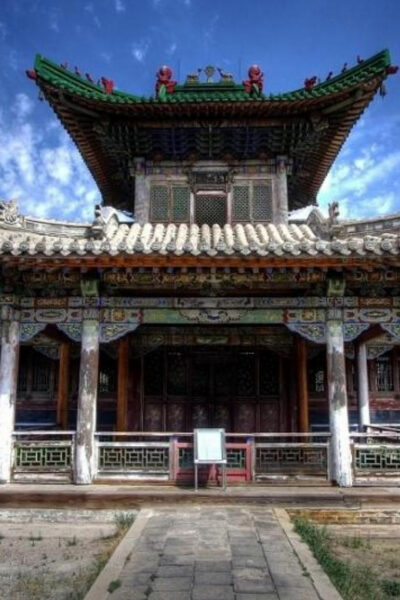
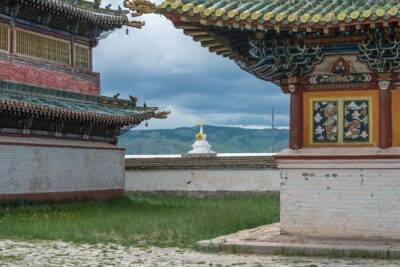
In Kharkhorin, you visit Erdene Zuu, described as an impressive monastery that the tour names in local context, plus a local museum. The program frames it around the 13th century capital site of the Mongol Empire. Even without getting lost in dates, the value of this stop is that it makes the history feel grounded. You are not imagining empire power in a textbook, you are seeing a place tied to the empire’s story.
Then you drive to Khustai National Park, established in 2003. The key wildlife angle is the Takhi reintroduction project, which began in 1992. The tour includes visiting the park’s information center, which is smart. It helps you interpret what you might see in the park, rather than relying on luck alone.
Finally, you return to Ulaanbaatar. The tour notes a lunch en route and a possible stop at a Gobi Factory Cashmere shop, then hotel check-in to end the trip.
Packing and comfort: what will make your days easier
The tour includes camping gear, but you still control your comfort. For a route that mixes desert dunes, hikes, and hot springs, I’d prioritize:
- Shoes for uneven ground (dunes and volcanic terrain both punish flimsy soles)
- Layers for mornings and evenings, even if days feel warm
- A light rain layer if your dates land in wetter shoulder periods
- Sunscreen and a hat, because open skies can be intense in the Gobi
- A small headlamp or reliable flashlight for tent nights, just in case
Camel days and hiking days are active, so pack with movement in mind. You will be much happier with fewer, simpler items you can access quickly.
Who this tour is for, and who should think twice
This is a great match if you want an outdoors-heavy Mongolia trip that still includes major culture moments. You get time for camel trekking, dune walking or riding, geology-heavy sites, monasteries, hot springs, volcanic-lake hikes, and then a historic capstone at Kharakhorum.
The tour also calls for moderate physical fitness. That does not mean you need to be an athlete, but you should be comfortable with hiking and long travel days. If you dislike camping nights entirely, this may not be your best fit, since part of the charm here is sleeping in tents with the night world close by.
Should you book this Gobi and Central Mongolia combination?
I think this is a smart booking if your “Mongolia dream” includes big dunes, real camping nights, and more than one kind of nature. The camel trekking and the pairing of Flaming Cliffs dinosaur history with Orkhon Valley and Erdene Zuu make it feel like you are getting both the planet and the people.
If you hate cold nights, hate uneven ground, or want a purely lodge-based itinerary, you might feel less happy here. Also, because the experience is described as requiring good weather, build in flexibility and expect that some days could be adjusted.
If you are the type who likes clear narratives and hands-on outdoor days, this 14-day route is one of the more coherent ways to see Mongolia in one go.
FAQ
How much does the tour cost?
The price is listed as $2,025.00 per person.
How long is the experience?
It is listed as 14 days, approximately.
What’s included in the tour package?
Included items are sleeping bag, tent, mattress, all fees and taxes, lunch (13), breakfast (13), and dinner (12). Pickup is also offered.
Is travel insurance included?
No. Travel insurance is listed as not included.
What fitness level do I need?
Travelers should have a moderate physical fitness level.
How many people are in the group?
The tour has a maximum of 12 travelers.
What happens if poor weather cancels the trip?
The experience requires good weather. If it is canceled due to poor weather, you’ll be offered a different date or a full refund.
More Tour Reviews in Ulaanbaatar
- From Ulaanbaatar: Genghis Khan Statue NationalPark CamelRide
★ 4.8 · 353 reviews - Genghis Khan Statue Day Tour+National Park+Camel Ride+Eagle
★ 4.5 · 261 reviews - From Ulaanbaatar: Central Mongolia Guided 3-Day Tour
★ 4.6 · 186 reviews - Ulaanbaatar: Small Group 3-Day Best of Central Mongolia Tour
★ 4.1 · 171 reviews - Terelj national park transport /Best price tour
★ 4.7 · 135 reviews
More Loops Through Central Mongolia
- From Ulaanbaatar: Central Mongolia Guided 3-Day Tour
★ 4.6 · 186 reviews - Ulaanbaatar: Small Group 3-Day Best of Central Mongolia Tour
★ 4.1 · 171 reviews - Central Mongolia Guided 3-Day Comfortable Tour
★ 4.5 · 37 reviews - 4 Day Best of Central Mongolia tour, Chinggis Khan statue
★ 4.8 · 21 reviews - 2 day Central Mongolia
★ 4.5 · 15 reviews
Deeper Into the Gobi
- Ulaanbaatar: Semi-Gobi Desert Day Trip & Camel Ride
★ 4.0 · 92 reviews - Best 6-Day Gobi Tour Discover Mongolia
★ 4.9 · 13 reviews - Travel to Gobi by train Visit World energy Center
★ 4.9 · 12 reviews - 8 Days Tour: Gobi Desert And Kharkhorin
★ 5.0 · 10 reviews - 1 Day Semi-Gobi Tour with Lunch And Enjoying Camel or Horseback
★ 5.0 · 9 reviews
Still fixing the route? Other Mongolia trips we have written up
Gobi Desert Expeditions, side by side.
 ★ 4.0Semi-Gobi Desert Day Trip & Camel RideFrom $17592 reviews
 ★ 4.9Best 6-Day Gobi Tour Discover MongoliaFrom $75013 reviews
 ★ 4.9Travel to Gobi by train Visit World energy CenterFrom $31012 reviews
 ★ 5.08 Days Tour: Gobi Desert And KharkhorinFrom $1,69310 reviews
 ★ 5.01 Day Semi-Gobi Tour with Lunch And Enjoying Camel or HorsebackFrom $1389 reviews
 ★ 5.0Gobi tour Mongolia 7 DaysFrom $1,2908 reviews
 ★ 4.9Bus tour to visit Gobi 4 dayFrom $6907 reviews
 ★ 4.57 days Central Mongolia and Great GobiFrom $1,5007 reviews
This tour also appears in